1 Day
Pilgrimage
Price on request
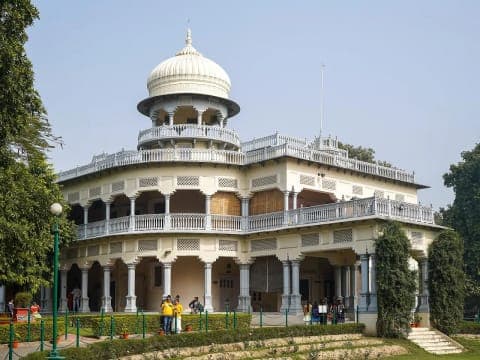
Same Day Prayagraj Tour Package
Prayagraj|Pilgrimage
Dawn Sangam Boat & Dip
Bade Hanuman & Fort
Anand Bhavan & Azad Park
 Varanasi
By Rajeev Sharma
Varanasi-born Pilgrimage Guide
The Ramnagar Ramlila (रामनगर रामलीला) is the world's most famous staging of the Ramayana: a 31-night enactment across the town of Ramnagar, opposite Varanasi, begun by the Kashi Naresh in the 1830s and inscribed by UNESCO as Intangible Cultural Heritage of Humanity. It runs through the Kartik season and culminates on Vijayadashami, when Rama slays Ravana. varanasiayodhyatours.com plans the nights that matter, the fort, and the crossing from the city, on WhatsApp.
Experience Ramnagar Ramlila: the play that turns a whole town into Ayodhya with a Kashi-born guide — darshan, stays and boats arranged.
The Ramlila runs for 31 nights, one leela each evening, culminating on Vijayadashami (Dussehra), the day Rama defeats Ravana. In 2026 Vijayadashami falls in late October, so the cycle runs from around the third week of September to Dussehra. The Kashi Naresh's household sets and announces the exact night-by-night schedule locally each year; message us on WhatsApp for the confirmed 2026 calendar and the nights we recommend.
This is not a stage play; it is a moving pilgrimage. Since Maharaja Udit Narayan Singh started it at Ramnagar in the 1830s, and King Ishwari Prasad Narayan Singh took it out of the fort among the people, the whole 5-square-kilometre town has been the set: fixed sites stand permanently for Ayodhya, Janakpuri, Panchavati, Lanka and Ashok Vatika, and the audience walks with the story from place to place across the month. The actors, all local, mostly young, playing Rama, Sita and the brothers, are the swaroops, treated as the deities themselves for the month; by tradition they answer only to their characters' names. Sadhus called Ramayanis follow with copies of Tulsidas's Ramcharitmanas, reciting the chaupais aloud as the leela unfolds. The Kashi Naresh still attends by tradition, and famously absents himself from Ravana Vadh, as a king unwilling to watch another king's death.
From the ground: for my guests, the magic is not a single night but the walk, following ten thousand people and a saint's chant from Janakpuri to Ayodhya by lamplight. I bring the Ramcharitmanas and read the chaupais with my Telugu and Kannada guests so the leela lands in their own tongue.
There is no ticket, no assigned seat, and no amplification in the traditional style: the swaroops speak, the Ramayanis chant, and the crowd carries the sound. A night begins at a designated site, the leela plays out, an aarti closes it with "Bolo Raja Ramchandra ki Jai", and the audience moves toward the next evening's ground. Bring a mat, a torch and patience; this is heritage kept exactly as it was, not a son-et-lumiere.
If you cannot give the month, choose the great set-pieces:
We plan your visit around the nights you want and handle the crossing and the timing.
Ramnagar Fort, the 18th-century home of the Kashi Naresh, sits on the eastern bank of the Ganga opposite Tulsi Ghat. Its Saraswati Bhawan museum holds vintage cars, royal palanquins, arms and an astronomical clock, and the fort is the historic patron and anchor of the Ramlila. A daytime fort visit pairs naturally with an evening leela.
The Ramlila is free and open; there is no ticket and no VIP box to sell, and the tradition is deliberately unamplified and unstaged in the modern sense. So the honest value here is not access but interpretation and logistics: a guide who knows the night's leela, reads the Ramcharitmanas chaupais with you, and handles the Ganga crossing to Ramnagar and back through a lakh of people in the dark. That, and choosing the right nights so a visitor with three evenings sees the ones that matter, not three random ones.
Ramnagar is across the Ganga from Varanasi, about 15 km by road via the bridge from the city centre, or a boat crossing from the ghats. From Lal Bahadur Shastri International Airport (VNS) it is around 40 km. On leela nights we run the crossing by private Innova Crysta and stage the return for the post-performance crowd. Full detail in the How to Reach Varanasi guide.
Stay in Varanasi and cross for the evenings: our guests are based at the Taj Ganges or Hilton Varanasi with breakfast, with the Innova on the Ramnagar runs. Ghat-side stays let you take a boat across at dusk, which is the atmospheric way to arrive. More in the Stay & Hotels guide.
The 4 Days Ayodhya Varanasi Tour Package, ₹50,000 per couple (₹25,000 per person), can be timed to the Ramlila season with an evening leela and the fort added, Taj or Hilton base and Innova throughout. A dedicated Ramlila itinerary, built around the signature nights (Dhanush Yagya, Bharat Milap, Ravana Vadh), runs on one flat rate: ₹12,500 per day for two guests, confirmed in writing before any advance. It falls just before the Kartik lamp season, so it pairs with the Ganga Mahotsav + Dev Deepawali package. Browse all packages.
It runs for 31 nights ending on Vijayadashami (Dussehra), which falls in late October 2026, so the cycle begins around the third week of September. The exact night-by-night schedule is set by the Kashi Naresh's household and announced locally; we confirm it for you.
It is the oldest and grandest Ramlila, over 200 years old, staged across a whole town with the audience walking with the story, and inscribed by UNESCO as Intangible Cultural Heritage of Humanity.
In the town of Ramnagar, across the Ganga from Varanasi, with permanent sites standing for Ayodhya, Janakpuri, Lanka and Ashok Vatika, and the Ramnagar Fort as its patron.
The local actors, mostly young, who play Rama, Sita and the brothers. For the month they are treated as the deities and, by tradition, answer only to their characters' names.
If you cannot give the full month, choose the set-pieces: Dhanush Yagya, Bharat Milap, Lanka Dahan and Ravana Vadh on Vijayadashami. We plan around the nights you want.
No. The Ramlila is free and open, unamplified and unstaged in the modern sense. What we add is interpretation and the crossing logistics, not access.
By road across the bridge, about 15 km, or a boat crossing from the ghats. We run it by private Innova and manage the return through the post-show crowd.
The walking and the crowd are demanding on the great nights. For a gentler visit we choose a calmer leela night and a seated vantage, and pair it with a daytime fort visit. Tell us mobility on WhatsApp.
Yes, with a guide; we read the Ramcharitmanas chaupais and narrate the leela in Telugu, Kannada or English as it plays.
Most Ramlilas run about ten days on a fixed stage; Ramnagar runs 31 nights across a whole town with a walking audience and a saint's live recitation, which is why it is the one UNESCO names.
Experience Ramnagar Ramlila: the play that turns a whole town into Ayodhya with a Kashi-born guide — darshan, stays and boats arranged.
Handpicked packages for sacred festivals and destinations.

.webp&w=2048&q=75)
Handpicked travel guides, local insights and practical information to help you plan your spiritual journey with ease.
.74539458.webp&w=2048&q=75)
Timings, entry process, VIP darshan, nearby attractions and important tips.
Fresh insights and useful information for your journey.
More spiritual gatherings across sacred destinations.
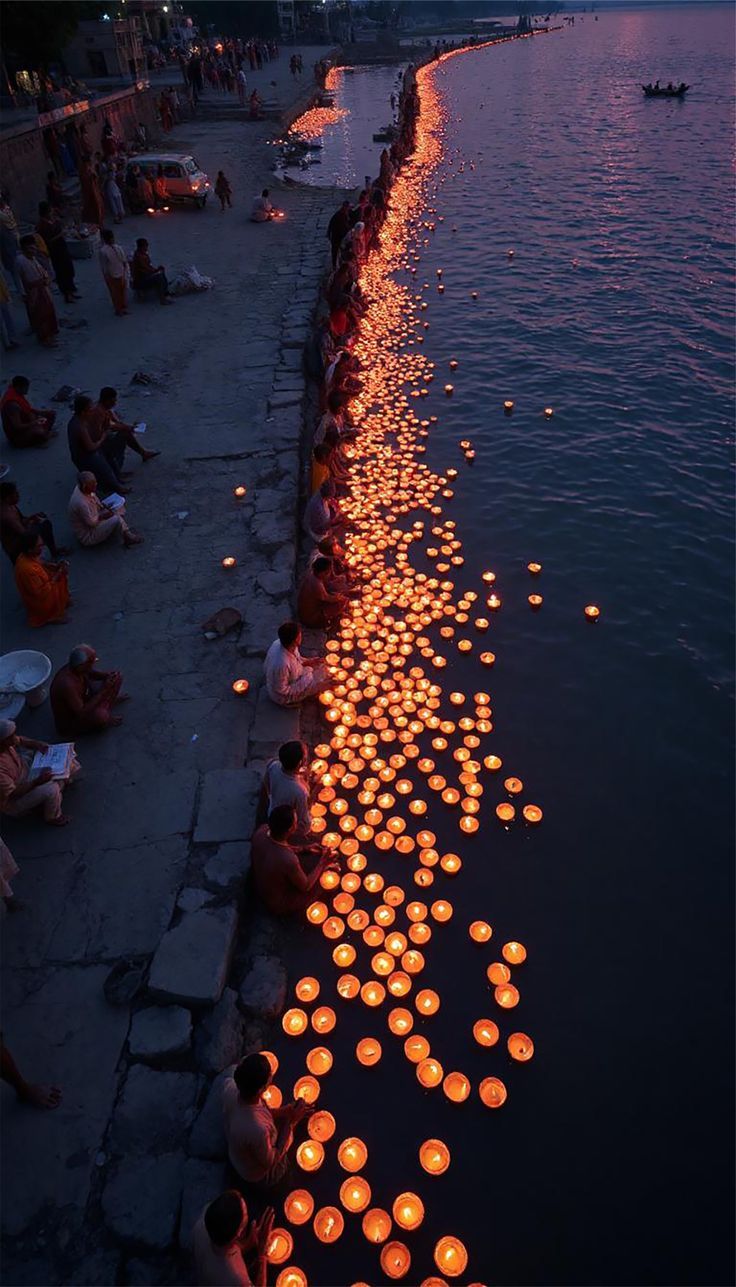
The Panchkroshi Yatra (पंचकोशी यात्रा) is the sacred parikrama around the whole of Kashi: an 88 km circuit that begins and ends at Manikarnika, with five padavs (halts), Kardameshwar, Bhimchandi, Rameshwar, Shivpur and Kapildhara, and 108 Shiva shrines along the way. Traditionally walked over five days, it is done today either on foot with dharamshala halts or in a single day by vehicle. varanasiayodhyatours.com plans both versions, the sankalp, the route and the pace, on WhatsApp.
View Details
Subah-e-Banaras (सुबह-ए-बनारस) is Varanasi's daily dawn ritual at Assi Ghat: begun on 24 November 2014, it opens in the Brahma Muhurta before sunrise with Vedic chanting and a hawan, a morning Ganga aarti to the rising sun, then live Banaras Gharana classical music and an open yoga session on the ghat steps. It runs every morning, is free to attend, and is the contemplative dawn counterpart to the grand evening Ganga Aarti at Dashashwamedh. varanasiayodhyatours.com plans the pre-dawn pickup, the seating and a sunrise boat around it, on WhatsApp.
View Details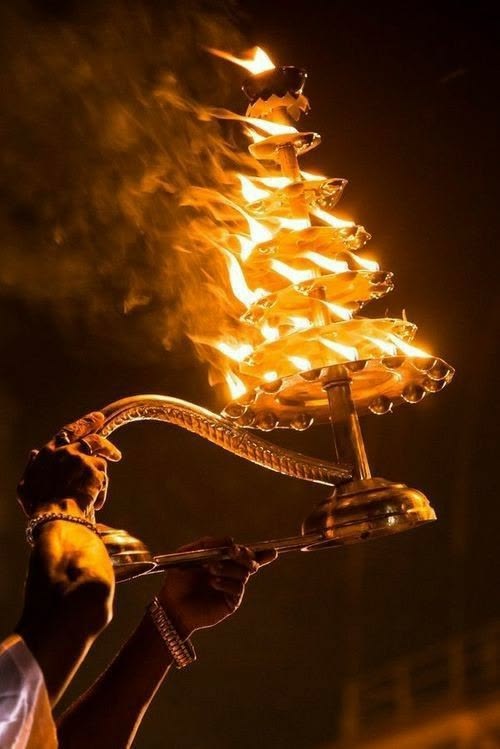
The Nageshwarnath temple (नागेश्वरनाथ) is Ayodhya's ancient presiding Shiva shrine, at Ram ki Paidi on the banks of the Saryu, said to have been established by Kush, the son of Lord Rama. In a city given to Rama, it is the great centre of Shiva worship, coming alive above all at Maha Shivratri, with its famous Shiva Baraat, and through the month of Sawan. varanasiayodhyatours.com plans the darshan and the Shiva festivals around it, on WhatsApp.
View Details
The Panchkroshi Yatra (पंचकोशी यात्रा) is the sacred parikrama around the whole of Kashi: an 88 km circuit that begins and ends at Manikarnika, with five padavs (halts), Kardameshwar, Bhimchandi, Rameshwar, Shivpur and Kapildhara, and 108 Shiva shrines along the way. Traditionally walked over five days, it is done today either on foot with dharamshala halts or in a single day by vehicle. varanasiayodhyatours.com plans both versions, the sankalp, the route and the pace, on WhatsApp.
View Details