1 Day
Pilgrimage
Price on request
Same Day Prayagraj Tour Package
Prayagraj|Pilgrimage
Dawn Sangam Boat & Dip
Bade Hanuman & Fort
Anand Bhavan & Azad Park
 Ayodhya
By Rajeev Sharma
Varanasi-born Pilgrimage Guide
The Saryu Aarti (सरयू आरती) is the daily evening lamp ceremony at Ram Ki Paidi in Ayodhya, performed by priests at sunset, around 7 PM, with multi-tiered brass lamps, conch and Vedic chant on the banks of the Saryu. It is Ayodhya's counterpart to the Ganga Aarti of Varanasi, free and open every evening, and it caps the classic Ayodhya day of Hanuman Garhi, Ram Mandir and the ghat. varanasiayodhyatours.com plans the sequence and the timing, on WhatsApp.
Experience Saryu Aarti at Ram Ki Paidi: Ayodhya's evening on the river with a Kashi-born guide — darshan, stays and boats arranged.
The Saryu Aarti is held every evening at sunset. There is a morning aarti too; the evening one is the ceremony most visitors come for.
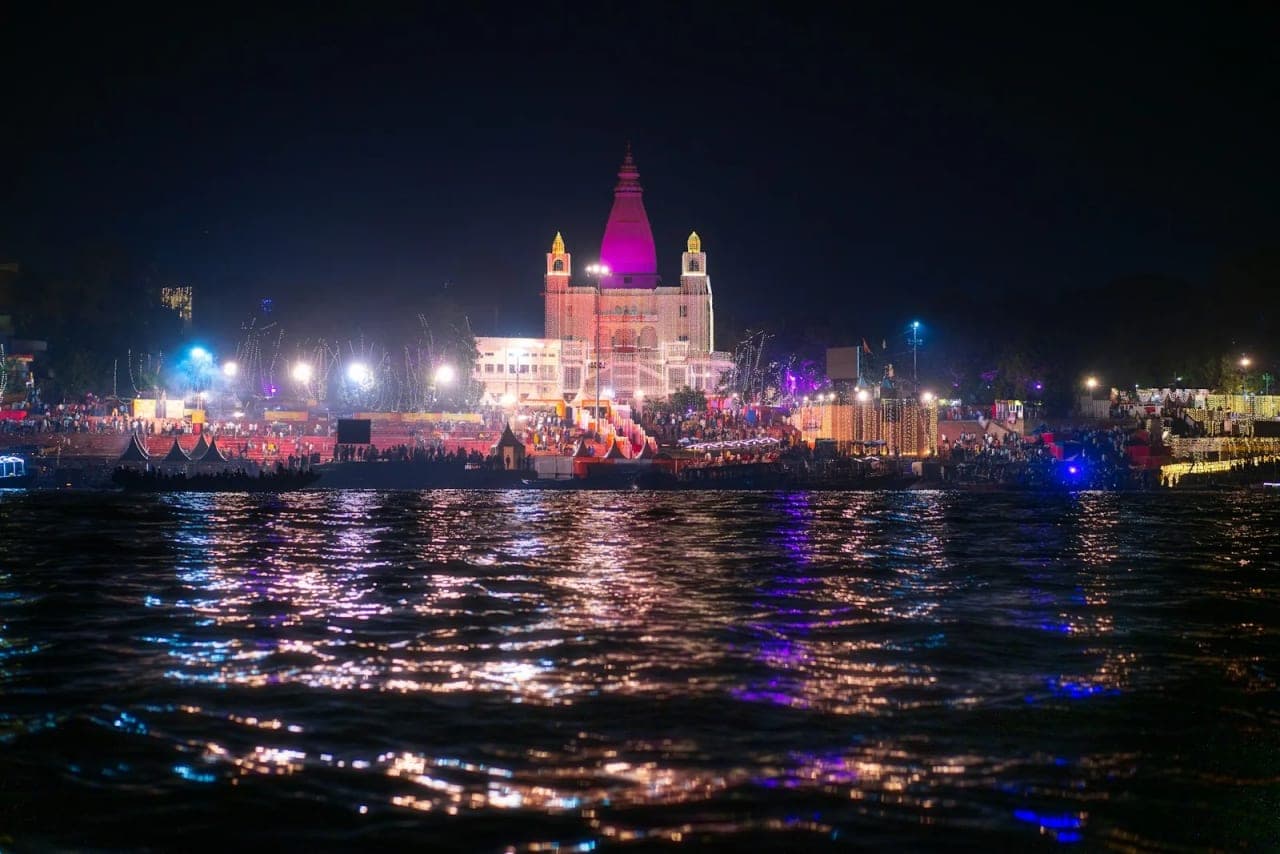
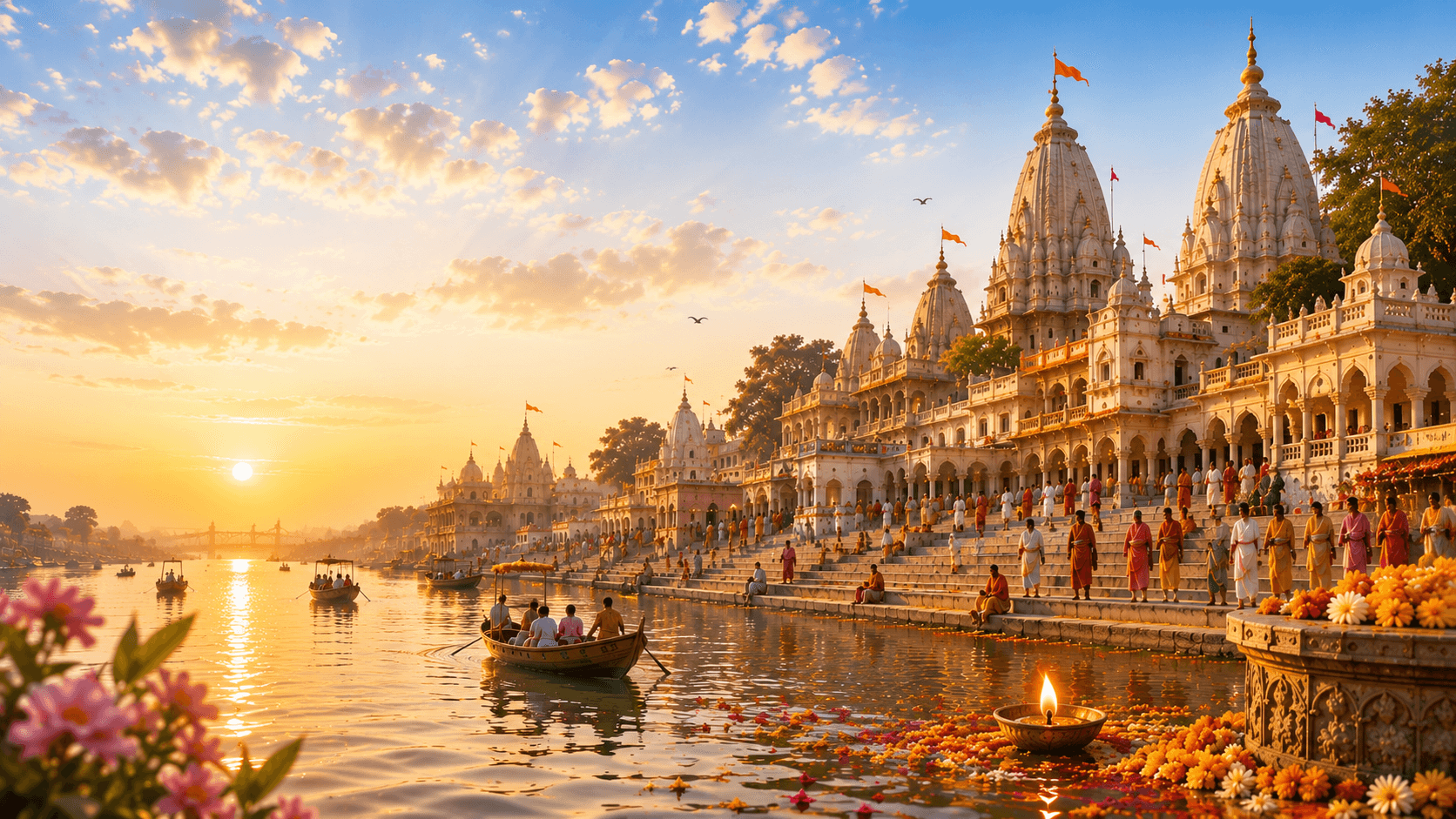
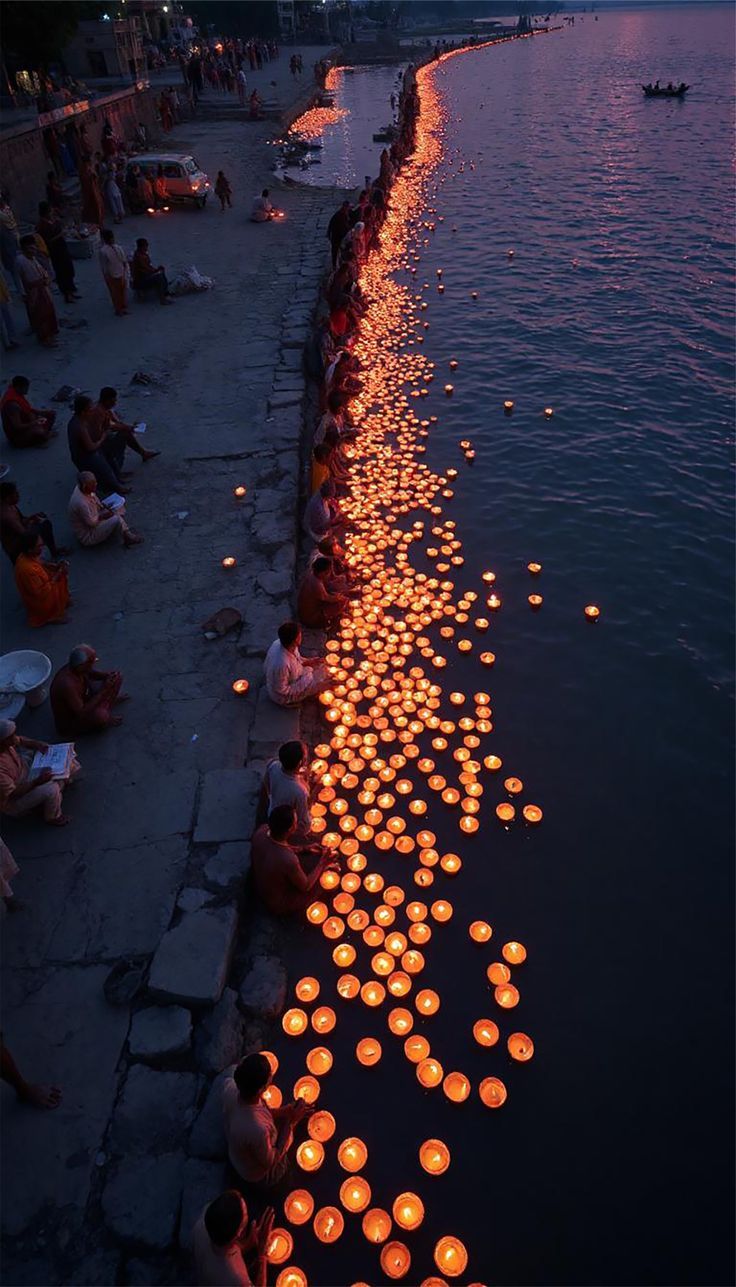
The aarti is at Ram Ki Paidi, the stepped riverfront on the Saryu, about 1.2 km from Ram Mandir. Priests perform in synchrony with large flaming lamps, conch shells, bells and devotional singing as the sun goes down and the ghats light up. Devotees float small diyas on the river. It is unamplified devotion, quieter and more intimate than the Ganga Aarti at Varanasi; the Saryu here runs relatively clean and calm, and the mood is reflective. Arrive 30 to 45 minutes early for a good spot at the lamp platforms.
From the ground: for my Telugu and Kannada guests, I explain the Saryu's place in the Ramayana as the aarti begins, the river Rama is said to have bathed in daily and, in the Uttara Kanda, the river of his final departure at Guptar Ghat. It changes how the lamps look.
The Saryu Aarti is the close of a sequence, not a standalone. The traditional order:
We build this so the darshan lands before the aarti, not in a scramble after it.
Ram Ki Paidi, "Ram's steps," is a series of ghats where, by tradition, Rama descended daily to bathe in the Saryu. The complex was upgraded significantly after 2020 with granite paving, lighting and clean facilities, and it is the venue of the world-record Deepotsav each Diwali eve. On an ordinary evening it is simply the most beautiful place in Ayodhya to watch the day end.
Through the monsoon month of Shravan (Sawan), Ayodhya keeps the Jhula Mela, considered the most elaborate of its kind in North India. Idols of Ram, Sita and Lakshman are placed on beautifully decorated swings inside the temples, especially at Kanak Bhawan, Hanuman Garhi and Ram Mandir, recreating the monsoon joy of the divine family, and a grand procession carries the swinging deities to Mani Parvat. It runs the whole month with daily bhajans and special aartis; any week in Shravan is a good time, and it is far less crowded than Ram Navami or Deepotsav. In 2026 Shravan runs from about 30 July to 28 August. Carry an umbrella; the temples are dressed in monsoon flowers and greenery, and the Saryu Aarti in the rain is its own memory.
Ram Mandir darshan is free for everyone. There is a free Sugam Darshan e-pass at the official portal (online.srjbtkshetra.org) for a faster queue, and free aarti passes for the Mangala, Shringar, Sandhya and Shayan aartis at the temple, booked on the same portal against a government ID. There is no paid VIP darshan at Ram Mandir; any agent charging for "VIP darshan" is running a fraud. The Saryu Aarti itself is free and needs no pass. What we honestly arrange is the plan: the e-pass and aarti-pass bookings, the sequence that dodges the noon closure, the locker run, and the timing so you reach Ram Ki Paidi for sunset. Access here is free; the value is getting it right.
October to March is the ideal window: cool, clear evenings for the aarti and comfortable temple days. The monsoon brings the Jhula Mela and a green, uncrowded Ayodhya. Summer is hot and best avoided for long temple days. The two great crowd peaks are Ram Navami (late March) and Deepotsav (Diwali eve); plan those far ahead.
Fly into Maharishi Valmiki International Airport, Ayodhya Dham, or into Lucknow (about 135 km); trains serve Ayodhya Dham Junction. From Varanasi it is about 200 km, roughly four hours by Innova, the route our two-city packages run. Ram Ki Paidi is about 1.2 km from Ram Mandir, walkable, with vehicles staged out on busy evenings. Full detail in the How to Reach Varanasi guide.
Our packages base you at the Taj Ganges or Hilton Varanasi with breakfast and add an arranged Ayodhya night when the itinerary needs it, close to the temple and the ghat. Ayodhya's own hotels fill for Ram Navami and Deepotsav and are easy the rest of the year. More in the Stay & Hotels guide.
The 4 Days Ayodhya Varanasi Tour Package, ₹50,000 per couple (₹25,000 per person), gives Ayodhya a full day ending on the Saryu Aarti, with Kashi across the itinerary, Taj or Hilton base and Innova throughout. For the festival peaks, the Ram Navami Ayodhya package and the Deepotsav Ayodhya package build the whole day around you. A custom Ayodhya itinerary runs on one flat rate: ₹12,500 per day for two guests, confirmed in writing before any advance. Browse all packages.
The main evening aarti is at sunset, around 7:00 PM, and runs about 45 minutes; there is a quieter morning aarti around 6:00 AM. Sunset shifts through the year, so confirm the exact time for your date.
At Ram Ki Paidi, the stepped riverfront on the Saryu, about 1.2 km from Ram Mandir.
Yes, it is free and open to all every evening. Donations are welcome but not required, and no pass is needed.
Same idea, different mood: the Saryu Aarti is quieter and more intimate, on a calmer, cleaner river, while the Ganga Aarti at Dashashwamedh is grander and more crowded.
Hanuman Garhi at sunrise, then Ram Mandir darshan, Kanak Bhawan, and the Saryu Aarti at sunset. Avoid arriving at the temple during the strict noon-to-2 PM bhog closure.
General darshan is free with no pass; a free Sugam Darshan e-pass at online.srjbtkshetra.org gets a faster queue. There is no paid VIP darshan; charging for it is a fraud.
Through Shravan (about 30 July to 28 August 2026), Ram, Sita and Lakshman are placed on decorated swings in Ayodhya's temples, with a procession to Mani Parvat. It is elaborate, monsoon-green and much less crowded than the marquee festivals.
October to March for cool, clear days; the monsoon for the Jhula Mela and quiet. Ram Navami and Deepotsav are the crowd peaks.
Yes; the belt runs Varanasi, Ayodhya and Prayagraj, and our packages link them by Innova on one flat day rate.
Yes; Ram Ki Paidi has broad steps and seating, and we arrange a close vehicle staging and an early arrival for a comfortable spot.
Experience Saryu Aarti at Ram Ki Paidi: Ayodhya's evening on the river with a Kashi-born guide — darshan, stays and boats arranged.
Handpicked packages for sacred festivals and destinations.

.webp&w=2048&q=75)
Handpicked travel guides, local insights and practical information to help you plan your spiritual journey with ease.
.74539458.webp&w=2048&q=75)
Timings, entry process, VIP darshan, nearby attractions and important tips.
Fresh insights and useful information for your journey.
More spiritual gatherings across sacred destinations.
The Panchkroshi Yatra (पंचकोशी यात्रा) is the sacred parikrama around the whole of Kashi: an 88 km circuit that begins and ends at Manikarnika, with five padavs (halts), Kardameshwar, Bhimchandi, Rameshwar, Shivpur and Kapildhara, and 108 Shiva shrines along the way. Traditionally walked over five days, it is done today either on foot with dharamshala halts or in a single day by vehicle. varanasiayodhyatours.com plans both versions, the sankalp, the route and the pace, on WhatsApp.
View Details
Subah-e-Banaras (सुबह-ए-बनारस) is Varanasi's daily dawn ritual at Assi Ghat: begun on 24 November 2014, it opens in the Brahma Muhurta before sunrise with Vedic chanting and a hawan, a morning Ganga aarti to the rising sun, then live Banaras Gharana classical music and an open yoga session on the ghat steps. It runs every morning, is free to attend, and is the contemplative dawn counterpart to the grand evening Ganga Aarti at Dashashwamedh. varanasiayodhyatours.com plans the pre-dawn pickup, the seating and a sunrise boat around it, on WhatsApp.
View Details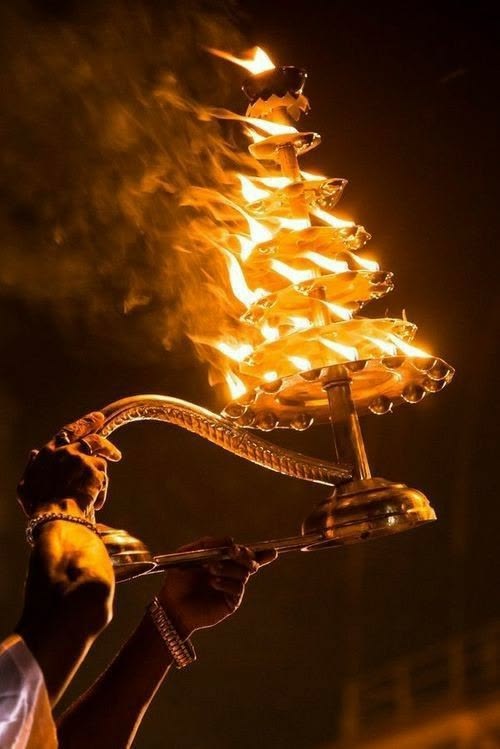
The Nageshwarnath temple (नागेश्वरनाथ) is Ayodhya's ancient presiding Shiva shrine, at Ram ki Paidi on the banks of the Saryu, said to have been established by Kush, the son of Lord Rama. In a city given to Rama, it is the great centre of Shiva worship, coming alive above all at Maha Shivratri, with its famous Shiva Baraat, and through the month of Sawan. varanasiayodhyatours.com plans the darshan and the Shiva festivals around it, on WhatsApp.
View Details
The Panchkroshi Yatra (पंचकोशी यात्रा) is the sacred parikrama around the whole of Kashi: an 88 km circuit that begins and ends at Manikarnika, with five padavs (halts), Kardameshwar, Bhimchandi, Rameshwar, Shivpur and Kapildhara, and 108 Shiva shrines along the way. Traditionally walked over five days, it is done today either on foot with dharamshala halts or in a single day by vehicle. varanasiayodhyatours.com plans both versions, the sankalp, the route and the pace, on WhatsApp.
View Details