1 Day
Pilgrimage
Price on request
Same Day Prayagraj Tour Package
Prayagraj|Pilgrimage
Dawn Sangam Boat & Dip
Bade Hanuman & Fort
Anand Bhavan & Azad Park
 Varanasi
By Rajeev Sharma
Varanasi-born Pilgrimage Guide
The Dhrupad Mela (ध्रुपद मेला) is a five-night festival of Dhrupad, the oldest surviving form of Hindustani classical music, held at Tulsi Ghat in Varanasi and timed to the days before Maha Shivratri. Revived in 1975, it runs from about 7 PM until after sunrise each night on the riverbank, is free to attend, and gathers the greatest Dhrupad artists in India for an audience of devotees, connoisseurs and travellers. varanasiayodhyatours.com plans the nights, the seating and the ghat around it, on WhatsApp.
Experience Dhrupad Mela: the oldest music, sung from dusk to dawn on Tulsi Ghat with a Kashi-born guide — darshan, stays and boats arranged.
The Mela runs for five nights, beginning about three days before Maha Shivratri (in the Phalguna month, February or March). Performances start in the evening and continue through the night until after dawn.
Dhrupad is the oldest form of Hindustani classical music still performed, older than the khayal that later overtook it in popularity. Its name comes from dhruva (fixed) and pada (words): a grave, austere, deeply meditative style rooted in Nada Yoga, the yoga of sound, and traced to the Vedic chanting of hymns. It unfolds slowly, a long, wordless alaap exploring the raga note by note before the composition and the pakhawaj enter. It was the court music of the Mughal emperors; Swami Haridas, the guru of Tansen, sang in this style. To hear it is to hear the root from which much of North Indian classical music grew.
From the ground: for my guests who love music, I explain that Dhrupad asks something of you: it is slow, it is serious, and at three in the morning on a cold Tulsi Ghat, with the river black in front of you, an alaap can open in a way no concert hall allows. This is not background music; it is the thing itself.
The Dhrupad Mela was revived in 1975 to rescue this ancient form from near-extinction, its first edition held on 21 February that year, inaugurated by Mahant Pandit Veerbhadra Mishra of the Sankat Mochan temple, the same figure behind the Sankat Mochan Sangeet Samaroh, with support from the Sangeet Natak Akademi and, from 1976, the patronage of the Kashi Naresh, Vibhuti Narayan Singh, through the Kashiraj trust. Held under the Banaras Vidya Mandir Nyas, it has run for over fifty years and is credited with keeping alive not just Dhrupad singing but nearly lost instruments like the Rudra Veena and Surbahar. The great Dagar family and many other lineages have made it their platform.
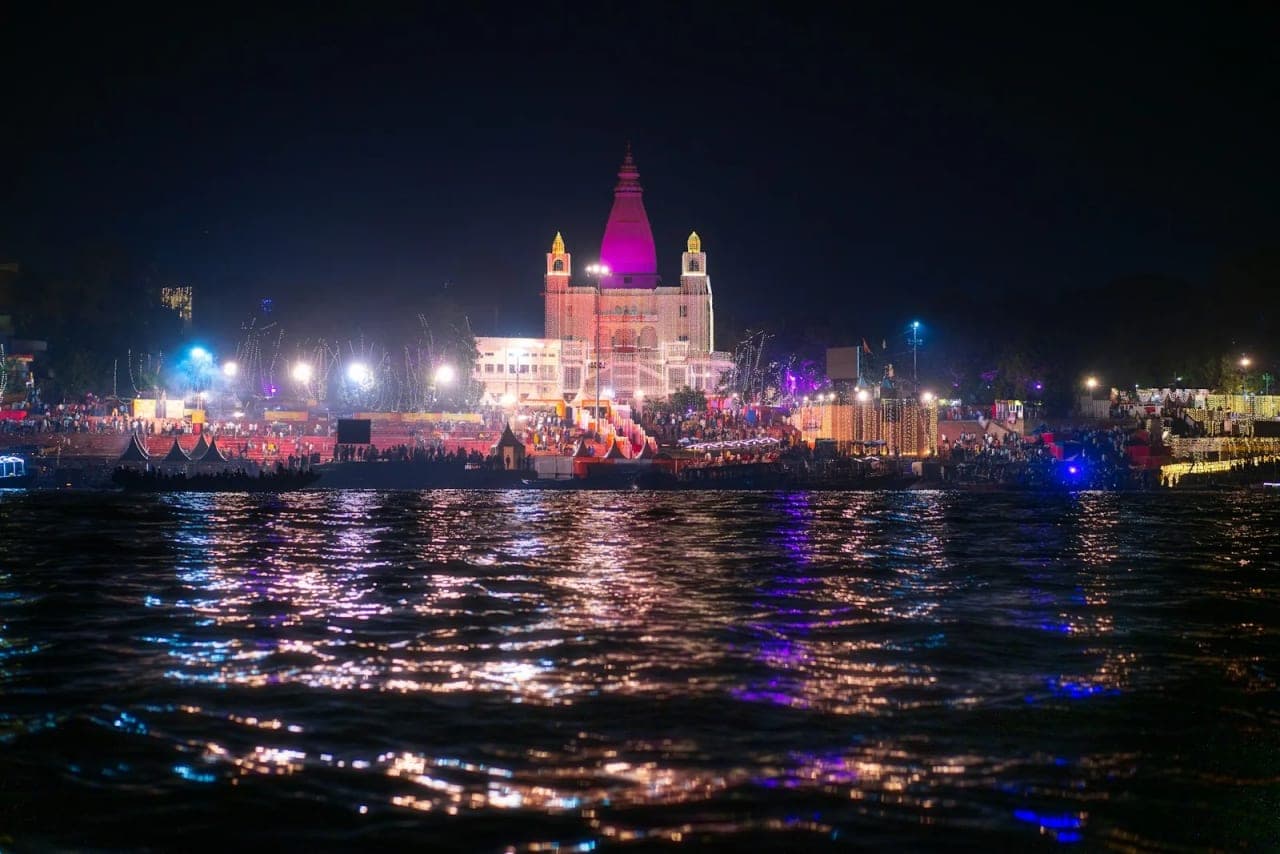
Tulsi Ghat, the riverside home of the poet-saint Tulsidas and the same ghat that hosts Nag Nathaiya, is the Mela's venue. The stage sits at Dhrupad Tirth on the ghat; a terrace overlooks the Ganga, and some listeners prefer to take the music from there, the river ahead, Assi Ghat to one side, the far bridge lights to the other. There is no formal, dry concert-hall atmosphere: entry is free, the setting is simple, and after each set the artists and connoisseurs mingle on the ghat. It is a mela, a gathering, as much as a concert.
A Dhrupad performance is spare and powerful: a lead voice (or a pair), supported by the tanpura's drone and driven by the pakhawaj, the deep two-headed barrel drum that is Dhrupad's rhythmic heart. The Rudra Veena, the grave, resonant string instrument central to instrumental Dhrupad, and the Surbahar (bass sitar) also appear, instruments the Mela is credited with helping save. Instrument-makers attend too: tanpura-makers from Miraj have brought their gourds and strings to the Mela for decades.
The Mela has hosted the greatest names in Dhrupad, the Dagars (including Ustad Zia Fariduddin Dagar and Wasifuddin Dagar), Pandit Prem Kumar Mallick, Pandit Ramashish Pathak and many others, alongside younger torchbearers and international performers from Europe, Nepal and beyond who have taken up this Indian form. The yearly line-up is announced close to the dates; as with all Varanasi's music festivals, the setting and the spirit are as much the draw as any single name.
Like Varanasi's other great music gatherings, the Dhrupad Mela is free: no ticket, no pass, no VIP seat, and anyone selling paid "Dhrupad Mela entry" is selling nothing real. The music is offered freely, in the spirit of the ghat. What we honestly arrange is the rest, getting you to Tulsi Ghat and seated in good time, a warm base for nights that run to dawn, a guide who can explain what Dhrupad is and why the slow alaap matters so you hear it rather than just wait through it, and the daytime ghats around it. This is a demanding, rewarding music; understanding it is the real value we add.
Fly into Lal Bahadur Shastri International Airport (VNS), about 26 km out; trains serve Varanasi Junction (about 6 km), Banaras and Kashi stations. Tulsi Ghat is at the southern end of the ghats near Assi; the lanes are walked and boats reach it from the river. Our guests move by private Innova Crysta, staged for the late-night return. Full detail in the How to Reach Varanasi guide.
Our package guests stay at the Taj Ganges or Hilton Varanasi with breakfast, a warm, comfortable base for music that runs till dawn. Assi and Tulsi Ghat side stays put you within walking distance of the Mela. More in the Stay & Hotels guide.
Because the Mela runs in the days before Maha Shivratri, it pairs naturally with a Maha Shivratri in Kashi visit: two of Phalguna's great nights in one trip. A cultural itinerary with the Dhrupad nights, the dawn Subah-e-Banaras next door at Assi and the classic sights builds on one flat rate: ₹12,500 per day for two guests, Taj or Hilton base, Innova throughout, confirmed in writing before any advance. It slots into the 4 Days Ayodhya Varanasi Tour Package, ₹50,000 per couple (₹25,000 per person). Browse all packages.
Five nights, beginning about three days before Maha Shivratri (in February or March). In 2027, with Maha Shivratri on 6 March, it falls in early March. Exact dates are announced yearly.
The oldest surviving form of Hindustani classical music, a grave, meditative style rooted in Nada Yoga and Vedic chanting, built on a long wordless alaap and the pakhawaj drum. It was the court music of the Mughal era.
At Dhrupad Tirth on Tulsi Ghat in Varanasi, the riverside ghat of the poet Tulsidas, at the southern end of the ghats near Assi.
No; it is free and open to all. Anyone selling paid entry or VIP seats is selling something that does not exist.
From about 7 PM until after sunrise each of the five nights; the deep, slow pieces often come in the small hours.
It was revived in 1975 by Mahant Veerbhadra Mishra of Sankat Mochan and has run for over fifty editions, credited with saving Dhrupad and instruments like the Rudra Veena from extinction.
Leading Dhrupad artists including the Dagar lineage, alongside younger and international performers. The line-up is announced close to the dates.
Dhrupad is slow and serious, not easy background music, but with a little context it is deeply rewarding. A guide who explains the alaap helps enormously, and the ghat setting stays with you regardless.
Yes; the Mela is timed to the days before Maha Shivratri, so a single early-March trip can hold both the music and the great Shiva night.
The Samaroh in April spans all Indian classical forms as an offering to Hanuman; the Dhrupad Mela in February or March is devoted to the single, ancient Dhrupad form on Tulsi Ghat. Both are free, and both were shaped by the same Mahant of Sankat Mochan.
Experience Dhrupad Mela: the oldest music, sung from dusk to dawn on Tulsi Ghat with a Kashi-born guide — darshan, stays and boats arranged.
Handpicked packages for sacred festivals and destinations.

.webp&w=2048&q=75)
Handpicked travel guides, local insights and practical information to help you plan your spiritual journey with ease.
.74539458.webp&w=2048&q=75)
Timings, entry process, VIP darshan, nearby attractions and important tips.
Fresh insights and useful information for your journey.
More spiritual gatherings across sacred destinations.
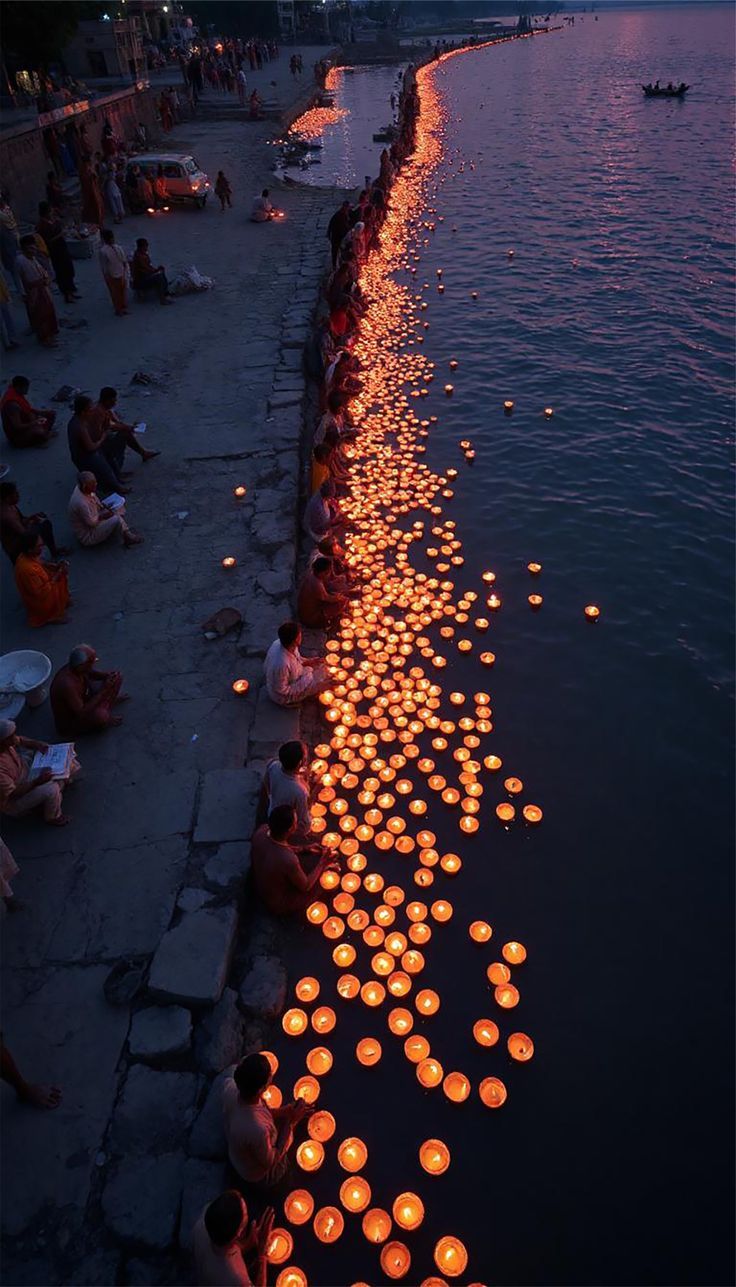
The Panchkroshi Yatra (पंचकोशी यात्रा) is the sacred parikrama around the whole of Kashi: an 88 km circuit that begins and ends at Manikarnika, with five padavs (halts), Kardameshwar, Bhimchandi, Rameshwar, Shivpur and Kapildhara, and 108 Shiva shrines along the way. Traditionally walked over five days, it is done today either on foot with dharamshala halts or in a single day by vehicle. varanasiayodhyatours.com plans both versions, the sankalp, the route and the pace, on WhatsApp.
View Details
Subah-e-Banaras (सुबह-ए-बनारस) is Varanasi's daily dawn ritual at Assi Ghat: begun on 24 November 2014, it opens in the Brahma Muhurta before sunrise with Vedic chanting and a hawan, a morning Ganga aarti to the rising sun, then live Banaras Gharana classical music and an open yoga session on the ghat steps. It runs every morning, is free to attend, and is the contemplative dawn counterpart to the grand evening Ganga Aarti at Dashashwamedh. varanasiayodhyatours.com plans the pre-dawn pickup, the seating and a sunrise boat around it, on WhatsApp.
View Details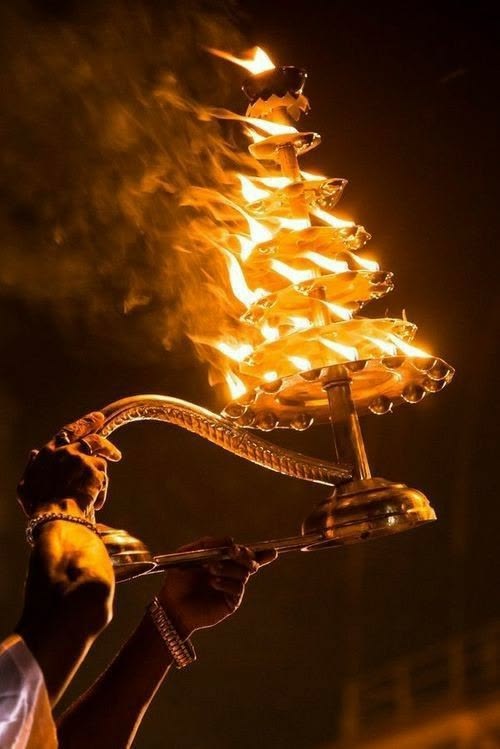
The Nageshwarnath temple (नागेश्वरनाथ) is Ayodhya's ancient presiding Shiva shrine, at Ram ki Paidi on the banks of the Saryu, said to have been established by Kush, the son of Lord Rama. In a city given to Rama, it is the great centre of Shiva worship, coming alive above all at Maha Shivratri, with its famous Shiva Baraat, and through the month of Sawan. varanasiayodhyatours.com plans the darshan and the Shiva festivals around it, on WhatsApp.
View Details
The Panchkroshi Yatra (पंचकोशी यात्रा) is the sacred parikrama around the whole of Kashi: an 88 km circuit that begins and ends at Manikarnika, with five padavs (halts), Kardameshwar, Bhimchandi, Rameshwar, Shivpur and Kapildhara, and 108 Shiva shrines along the way. Traditionally walked over five days, it is done today either on foot with dharamshala halts or in a single day by vehicle. varanasiayodhyatours.com plans both versions, the sankalp, the route and the pace, on WhatsApp.
View Details